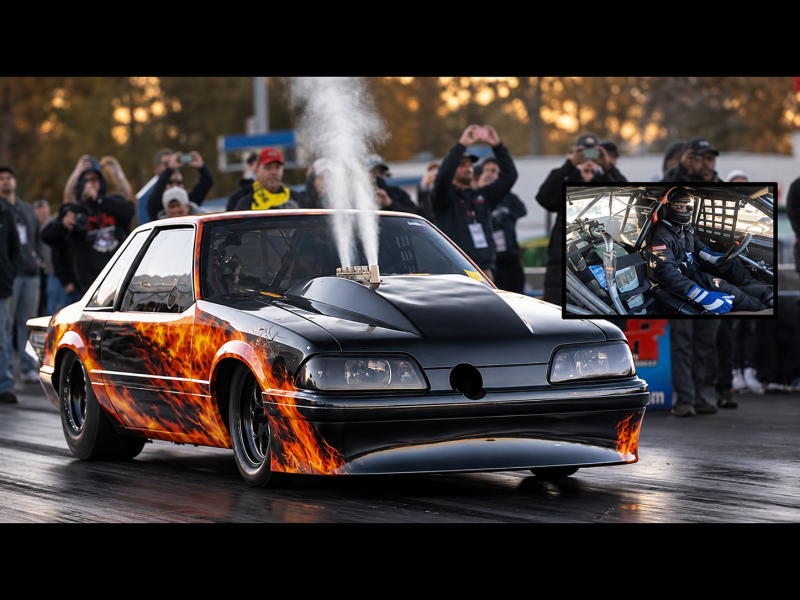
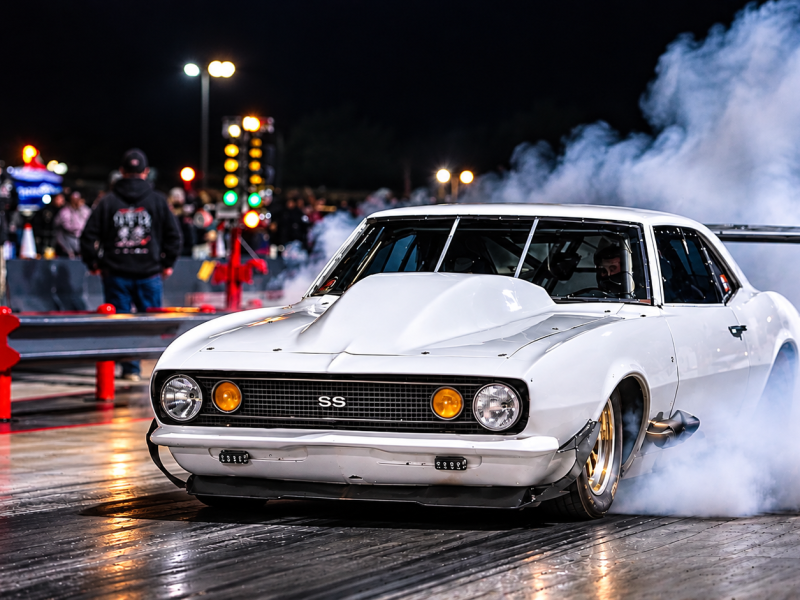
Take a look at this, $80,000 Texas No-Prep Race Pushes Gen 2 Garage to the Limit on a Brutal Racing Surface!
In drag racing, horsepower usually gets the headlines. But when the racing surface offers almost no traction, having the most powerful car doesn’t guarantee anything.
That’s the challenge at the center of Gen 2 Garage’s latest video, “The HARDEST Track I’ve EVER Raced on – $80K Texas No Prep.”
The 36-minute video follows a high-stakes Texas no-prep racing adventure, where the team faces an exceptionally demanding track with an advertised $80,000 at stake.
For competitors accustomed to carefully prepared drag strips, racing on an unforgiving surface presents an entirely different challenge.
And when serious money is involved, every mistake becomes even more costly.
Why This Texas No-Prep Track Is So Difficult
Most professional drag racing facilities use specialized traction compounds and extensive surface preparation to help high-horsepower cars accelerate efficiently.
No-prep racing is different.
Instead of relying on a heavily treated surface, drivers must manage traction on pavement or concrete that offers substantially less grip.
That changes everything.
A car that launches perfectly on a prepared track might immediately spin its tires on a no-prep surface.
Even a relatively conservative tune-up can become difficult to manage if the surface has inconsistent traction.
The title of Gen 2 Garage’s latest video suggests that the conditions presented an unusually difficult challenge for the team.
For viewers, that makes the racing particularly interesting.
Rather than simply watching cars make perfect passes, fans get to see the technical and driving challenges that make no-prep competition unpredictable.
Texas Has Become a Hotspot for High-Dollar No-Prep Racing
Texas has a long history of hosting some of the most competitive no-prep events in the country.
In 2026, WesTx Abilene Raceway became particularly prominent after introducing an extreme bare-concrete racing surface.
Track owner Matt Tucker had the racing surface sandblasted down to bare concrete, creating a demanding environment where conventional traction strategies were less effective.
During the July 2026 Freedom of War event, competitors battled for a $150,000 small-tire purse.
Chase Womack eventually captured the $75,000 winner’s share after defeating teammate LJ Grissom in the final.
The competition demonstrated how important tuning, driver skill, and consistency become when the racing surface is exceptionally difficult.
Later that year, Abilene hosted the War of Reckoning, another major no-prep event featuring a large field and substantial advertised payouts.
These events illustrate why Texas has become such an important destination for grassroots drag racing.
Although Gen 2 Garage’s $80,000 challenge fits this competitive environment, the precise event and track featured in the video have not been independently confirmed.
Why More Horsepower Doesn’t Always Mean More Speed
One of the biggest misconceptions about no-prep racing is that the fastest car automatically wins.
In reality, too much horsepower can be a disadvantage.
Modern small-tire race cars can produce extraordinary engine output through turbochargers, superchargers, or nitrous oxide systems.
But the tires can only transfer a limited amount of that power to the racing surface.
When the available traction is exceeded, the tires begin spinning.
That wastes acceleration and can make the vehicle difficult to control.
To prevent this, teams often adjust boost delivery, ignition timing, suspension settings, and power-management strategies.
Instead of applying maximum horsepower immediately, they may gradually increase engine output as the car accelerates.
Finding the correct balance is especially difficult when track conditions change throughout the event.
The winning combination is often the one that makes the most effective use of the available traction—not necessarily the one with the highest horsepower figure.
An $80,000 Race Creates Serious Pressure
The advertised $80,000 stakes add another dimension to the challenge.
For many grassroots racing teams, competing for that amount of money represents an extraordinary opportunity.
A successful weekend can help cover expensive engine components, transmissions, tires, transportation, and future racing expenses.
But reaching the final rounds of a major no-prep event requires much more than one fast pass.
A team must survive repeated elimination rounds while keeping the car mechanically reliable.
Even small problems can become expensive.
A damaged transmission, failed engine component, or suspension issue may eliminate a competitor before the next round begins.
And on a difficult racing surface, the risk of losing traction is always present.
The video’s $80,000 figure has not been independently established as a winner-take-all prize, so the exact payout structure remains unconfirmed.
Every Pass Becomes a Battle Against the Track
On a conventional prepared drag strip, drivers often focus on maximizing their launch and maintaining the quickest possible elapsed time.
On a difficult no-prep surface, the priorities change.
Getting the car moving cleanly can be more important than making an aggressive launch.
Drivers must also react quickly when the tires begin losing traction.
A small steering correction or throttle adjustment can determine whether the car continues down the track or loses the race.
Crew chiefs face an equally difficult task.
They must decide whether to increase power after a successful pass or remain conservative to avoid overwhelming the tires.
The challenge becomes even greater when competitors are racing side by side.
A driver who sees an opponent pulling ahead may be tempted to stay in the throttle, even when the car is struggling for traction.
That combination of pressure and uncertainty is one reason no-prep racing remains so exciting to watch.
The Difference Between Winning and Going Home
At major no-prep events, the strongest competitors are not always the ones making the most spectacular passes.
Consistency often determines who survives.
A driver who can repeatedly make clean runs may advance through the field while faster opponents struggle with tire spin or mechanical problems.
The strategy becomes especially important as elimination rounds progress.
Every successful pass brings the team closer to the advertised payday.
But it also increases the pressure.
The crew must keep the car ready, the driver must remain focused, and the tune-up must continue matching the track conditions.
When the racing surface is exceptionally difficult, even experienced teams can find themselves fighting simply to complete a competitive run.
Gen 2 Garage Faces the Ultimate No-Prep Challenge
Gen 2 Garage’s latest Texas racing adventure highlights one of the most compelling aspects of grassroots motorsports.
It isn’t always about having the most expensive car or the largest engine.
Sometimes, the biggest challenge is simply finding a way to put the available horsepower to the ground.
The video’s combination of an exceptionally difficult racing surface and an advertised $80,000 prize creates the kind of pressure that makes no-prep competition so unpredictable.
Every pass demands careful preparation, mechanical reliability, and precise driving.
And when the track refuses to cooperate, even the best-laid plans can fall apart.